There is something genuinely satisfying about a small living room that works well. Not a space that apologises for its size, but one that feels considered, comfortable, and completely intentional. Getting there is less about spending a lot of money and more about making smarter decisions with what you already have.
Small rooms tend to feel cluttered before they even have a chance to feel lived in. A piece of furniture in the wrong spot, a wall left bare, or one too many things competing for attention, and suddenly the room feels smaller than it actually is.
The good news is that most of the fixes are simpler than people expect. A change in colour, a shift in how the walls are used, or a more thoughtful approach to what goes on display can completely change how a room feels.
These seven ideas are practical, achievable, and genuinely make a difference. There is no need to complete a renovation, just a fresher way of thinking about the space.
Use Vertical Space to Your Advantage
Most people furnish a room from the floor up and stop somewhere around eye level. In a small living room, that leaves a lot of wall space doing nothing. That unused space above eye level is actually one of the most valuable parts of the room.
Drawing the eye upward makes a space feel taller and more open. Tall bookshelves, stacked wall decor, and vertically arranged picture frames all do this naturally. It is a simple shift in thinking that has a noticeable impact on how generous the room feels.
Portrait-oriented photo frames work especially well in this setting. Arranging two or three picture frames in a vertical column naturally draws the eye upward and creates a greater sense of height without using any floor space. A single tall, narrow print in a larger picture frame can achieve the same elegant effect.
The key is to be intentional about it. A random scattering of photo frames at the same height tends to make walls feel flat. Varying the heights and thinking vertically alters the room's dynamic.

Build a Gallery Wall That Tells a Story
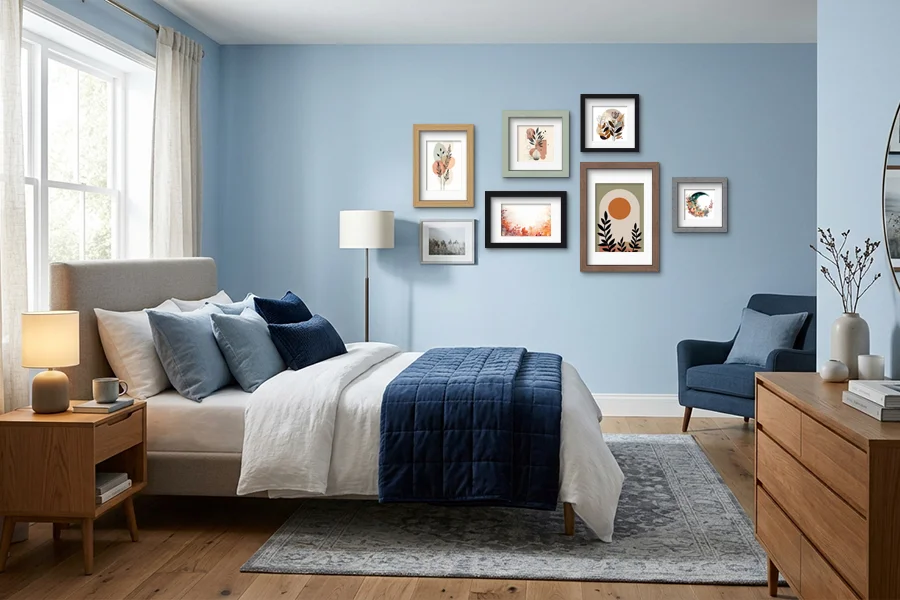
A gallery wall is one of the most effective ways to make a small living room feel larger. It adds personality to a wall, draws attention exactly where you want it, and keeps the floor completely clear. Done well, it becomes the focal point of the entire room.
The most common mistake is treating it as an afterthought, grabbing a few random photo frames and spacing them out evenly. A gallery wall that actually works needs a little planning up front. Mixing picture frame sizes, playing with orientations, and leaving breathing room between each piece makes the arrangement feel curated rather than cluttered.
Keeping the photo frame finish consistent is what ties everything together. A collection of picture frames in the same finish, like a clean matte black, creates a sense of order even when the prints and photos inside are all completely different. It gives the eye something to follow without the wall feeling too uniform or rigid.
Black picture frames work really well for this. Whether it is a mix of A4, A3, and A2 picture frames or a more considered arrangement of different sizes, having a consistent finish across the wall makes the whole display feel cohesive.
The mount colour is where the personality can come through. An ivory or ice-white picture mount keeps things light and fresh, while a mid-grey or black mount adds a moodier, more dramatic feel.

Choose the Right Colours to Open the Space Up
Colour has a bigger impact on how a room feels than almost anything else. In a small living room, the wrong palette can make walls feel like they are closing in. The right one can make the same room feel twice as airy.
Light and neutral tones are the obvious starting point, and for good reason. Shades like soft white, warm cream, and pale grey reflect natural light rather than absorbing it. They instantly make a space feel more open and breathable.
This thinking applies beyond just the walls. Furniture, soft furnishings, and even picture frame mount colours all contribute to the room's overall tone. A gallery wall with ivory or ice-white mounts sits quietly against a light wall, adding warmth without visual weight.
Darker colours are not entirely off the table. A single deliberately used darker wall can actually add depth to a small room rather than shrinking it. One considered decision beats four walls of a colour that was never quite right.

Embrace Multifunctional Furniture
In a small living room, every piece of furniture needs to earn its place. If something only does one job, it is worth asking whether something else could do two.
Storage ottomans, nesting tables, and wall-mounted shelves are all good examples. They handle the practical side of a room without requiring extra floor space. A sofa with built-in storage underneath, or a coffee table with shelving below, keeps everyday clutter out of sight without needing an extra cupboard.
The goal is to keep the floor as clear as possible. The more floor that is visible, the more spacious the room feels.
Buying less but buying better is the mindset that works best in smaller spaces. One well-chosen piece that does the job properly will always outperform three cheaper ones that only add to the visual noise.

Let Light Do the Heavy Lifting
Natural light is the most powerful tool in small living rooms, and it costs nothing. The more of it that can move freely around the space, the bigger and more comfortable the room will feel.
Keeping window areas clear is the obvious first step. Heavy curtains and bulky furniture placed near windows block the very thing that makes a small room feel open. Vertical blinds or lighter window treatments let the light in while still keeping the space feeling finished.
Mirrors help greatly, too. Placed opposite or adjacent to a window, they bounce light around the room, creating a sense of depth that is difficult to achieve any other way.
Artwork and wall decor placed in well-lit areas of the room naturally draw the eye and make the space feel more considered. It is a small detail, but a well-lit wall display always looks more intentional than one sitting in a dim corner.

Keep It Personal Without the Clutter
There is a fine line between a space that feels personal and one that feels overcrowded. In a small room, that line matters more than anywhere else.
The instinct is often to display everything, every photo, every print, every meaningful object. But a smaller, more considered selection of things always has more impact than a wall or surface covered in competing pieces.
A few well-framed prints or photographs, chosen deliberately and displayed properly, say far more than a dozen things thrown together. Framing something properly is what elevates it from an item to a feature.
Made to measure picture frames are worth considering here, particularly for prints or artwork that do not fit standard sizes.
A print that fits its frame perfectly, with a mount that complements both the image and the room, looks considered in a way that an ill-fitting photo frame simply never does.

Think About Flow and Furniture Placement
How a room is arranged has just as much impact on how it feels as what is inside it. A small living room with good flow feels comfortable and easy to move around in. One with poor flow feels cramped regardless of its size.
Avoid pushing every piece of furniture against the walls. It feels counterintuitive, but pulling seating slightly away from the edges can actually make a room feel more spacious, not less.
Keeping pathways clear is equally important. Blocking a natural route through the room, even slightly, creates a subconscious sense of restriction that affects how the whole space feels.
The same thinking applies to wall decor. Picture frames and artwork that are proportional to the wall and the furniture beneath them look considered and balanced. A large photo frame on a small wall can overwhelm the space, while something too small can get lost entirely and add nothing.

Conclusion
Small living rooms reward thoughtful decisions more than large ones do. Every choice, from the furniture arrangement to the colours on the walls to what goes on display, has a visible impact on how the space feels day to day.
The ideas here are not about transforming a room overnight. They are about building a space gradually and intentionally, where everything has a reason for being there, and nothing is just filling a gap.
A small room that has been thought about properly never feels small. It just feels right.