Blue is one of those colours that works in almost every bedroom. It is calming, versatile, and when used well, it creates a space that feels genuinely restful. The challenge is that blue spans a wide spectrum, and the decisions made about it matter just as much as the shade itself.
A soft powder blue on the walls feels completely different to a deep navy. One feels light and airy, and the other feels rich and cocooning. Neither is wrong, but both need a different approach to bring out the best in them.
The bedroom is also the most personal room in a home. It is where colour choices feel the most significant and where getting it wrong is the most noticeable.
This guide covers everything you need to know about decorating a blue bedroom. Whether starting from scratch or looking to refresh a room, these ideas are practical, honest, and genuinely useful.
Choosing the Right Shade of Blue
Blue is not a single colour. It is an entire family of colours, and each one creates a different atmosphere in a bedroom. Getting the shade right is the most important decision in the whole process.
Soft, muted blues like powder blue, duck egg, and pale cornflower create a calm, airy feel. They work well in rooms that get reasonable natural light and suit bedrooms where the goal is a quiet, relaxed atmosphere. These shades are also more forgiving in smaller rooms because they do not visually close the space in.
Mid-tones like slate blue and dusty teal sit somewhere in the middle. They have more depth than a pale blue without the full commitment of a dark shade. They tend to work well in rooms with warm lighting and pair naturally with both neutral and earthy tones.
Deep blues like navy, indigo, and midnight blue make a bold, confident statement. When used well, they create a bedroom that feels warm, dramatic, and considered. If used carelessly, they can make a room feel dark and unwelcoming. These shades need the right lighting, the right complementary colours, and enough contrast to stop the room from feeling flat.
One thing worth doing before committing to any shade is testing it properly. Paint a generous sample on the wall and live with it for a couple of days. Check it in the morning light, in the evening under artificial light, and on a cloudy day. Blue is one of the colours that shift most noticeably with the light around it.

How to Use Blue Without Overdoing It
There is a difference between a blue bedroom and a room that is overwhelmed by blue. The shade might be perfect, but if it covers every surface without any relief, the result can feel heavy and one-dimensional.
The walls are the natural starting point for blue in a bedroom. But what surrounds those walls matters just as much as the colour itself. Furniture, bedding, curtains, and flooring all interact with the wall colour, either balancing it or amplifying it.
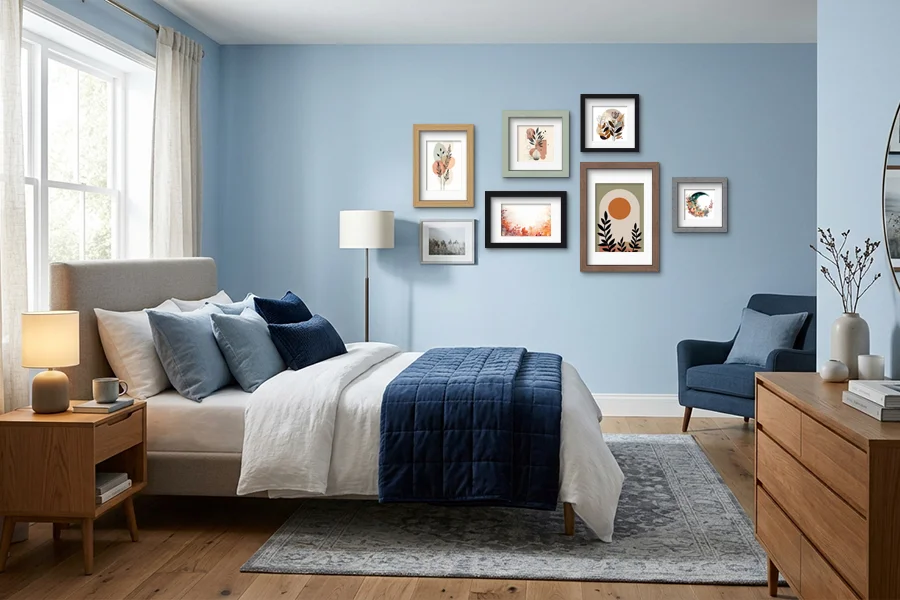
A common approach that works well is keeping the larger furniture pieces neutral. A white, cream, or natural wood bed frame against a blue wall creates an immediate contrast that stops the room from feeling closed in. The blue becomes the feature without competing with everything else around it.
Bedding and soft furnishings are where there is room to play. Layering different textures in complementary tones adds depth and warmth to the room without introducing too much additional colour. Linen, cotton, and velvet all sit beautifully against blue walls and add a tactile quality that makes the room feel more considered.
For those who want the feel of a blue bedroom without full blue walls, a single feature wall is a reliable option. It introduces the colour with impact while keeping the remaining three walls lighter and more open. It is particularly effective in smaller bedrooms where full blue walls might feel overwhelming.

The Best Colours to Pair With Blue
Blue is one of the most versatile colours to pair with. It sits comfortably alongside a wide range of tones, and choosing the right combination is what gives a blue bedroom its character.
White and Cream
The most classic pairing, and for good reason. White and cream create a clean contrast against blue walls without competing for attention. Cream in particular adds a softness that pure white sometimes lacks, making the room feel warm rather than clinical.
Warm Wood Tones
Natural wood is one of the best things you can introduce into a blue bedroom. Oak, walnut, and pine all bring warmth and an organic quality that beautifully balance the coolness of blue. A wooden bed frame, bedside tables, or even a wooden floor can make a significant difference to how the room feels overall.
Blush, Terracotta, and Burnt Orange
These might seem like unexpected choices alongside blue, but they work surprisingly well. Warm, earthy tones sit opposite blue on the colour wheel. They create a natural contrast that feels vibrant without being jarring. Even small touches of terracotta, such as cushions or artwork, can bring a blue bedroom to life.
Gold and Brass
In deeper navy bedrooms, particularly, gold and brass accents add a richness that stops the room from feeling cold. A brass lamp, gold picture frame, or metallic hardware on furniture introduces just enough warmth to balance a deep, dramatic blue.

Lighting a Blue Bedroom the Right Way
Lighting and colour are inseparable. The way a blue bedroom looks in the morning is rarely how it looks in the evening, and understanding that relationship makes a real difference to how the room is planned.
Blue is particularly sensitive to light temperature. Cool white bulbs tend to push blue walls further towards cold, flat tones, which is rarely the effect anyone is going for in a bedroom. Warm white bulbs, on the other hand, soften blue considerably and bring out its more inviting, restful qualities.
This is worth considering when choosing light fittings. A bedroom that relies solely on a ceiling light will always feel less considered than one with layered light sources. Bedside lamps, wall lights, and even a small lamp on a dresser all contribute to a warmer, more balanced atmosphere that works with the blue rather than against it.
North-facing bedrooms present a specific challenge. Without direct sunlight, blue walls in a north-facing room can lean grey and cold at certain times of day. Warmer bulbs help, as does choosing a shade of blue with slightly warmer undertones rather than a pure, cool blue.
Natural light is always worth protecting in a blue bedroom. Lightweight curtains or sheer blinds that let daylight flow freely through the room keep the space feeling fresh and bright during the day. On the other hand, warmer artificial lighting takes over in the evening to maintain the right mood.

Wall Decor and Artwork in a Blue Bedroom
Blue walls create a strong backdrop, and what goes on them deserves just as much thought as the colour itself. The right wall decor pulls a blue bedroom together. The wrong choices can feel disconnected from the rest of the room.
Artwork with warm tones works particularly well against blue. Prints featuring earthy colours, botanicals, warm abstracts, or natural landscapes all sit comfortably against a blue wall and add visual interest without clashing.
The picture frames' finishes are worth considering carefully here. Natural wood photo frames bring warmth and an organic quality, softening blue walls beautifully. Black picture frames create a bold, graphic contrast that suits deeper navy tones particularly well. White photo frames keep things light and clean. They work best against softer, paler shades of blue.
Mount colours play a quieter but equally important role. A warm ivory or cream mount adds a softness between the artwork and the blue wall. They make the whole display feel considered.
Ice white picture mounts keep things crisp and fresh. They suit more minimal bedroom styles. For deeper blue rooms, a mid-grey or warm-neutral mount can tie everything together without introducing too much contrast.
A gallery wall works beautifully in a blue bedroom, too. A carefully arranged mix of photo frames in a consistent finish, placed on the largest wall or above the bed, creates a focal point that adds personality and depth to the room. Keeping the frame finish consistent across the arrangement prevents it from feeling cluttered against an already strong wall colour.

Blue Bedroom Ideas for Smaller Rooms
A common concern with blue in a smaller bedroom is that it will make the space feel even more enclosed. With the right shade and the right approach, the opposite can be true.
Lighter shades of blue are naturally more forgiving in smaller rooms. Powder blue, soft duck egg, and pale sky blue all reflect light rather than absorbing it, which helps the room feel more open and airy. These shades bring the calming quality of blue into a smaller space without any of the heaviness that deeper tones can introduce.
Keeping furniture minimal and close to the wall gives the room more breathing space. A bed, a bedside table, and a slim wardrobe are often all a smaller bedroom needs. Every unnecessary piece of furniture removed makes the space feel more generous.
Thinking vertically helps considerably in a smaller blue bedroom. Portrait-oriented picture frames arranged in a column, a tall, slim mirror, or a piece of artwork positioned higher on the wall all draw the eye upward. Moreover, they create a sense of height, making the room feel larger than it is.
Mirrors deserve a specific mention here. A well-placed mirror in a smaller blue bedroom reflects both light and the colour itself. It adds depth and makes the room feel considerably more spacious. When you pair a couple of carefully chosen photo frames, the wall becomes a display rather than just a surface.

Making a Navy Blue Bedroom Feel Warm, Not Cold
The Navy Blue is the most rewarding shade of blue to get right and the easiest to get wrong. Without the right decisions, a navy blue bedroom can feel cold and heavy rather than rich and inviting.
Texture is the most effective tool here. Layering linen bedding, velvet cushions, and a thick wool throw introduces warmth that paint alone cannot provide. The more tactile the room feels, the less cold the navy reads.
Warm lighting is non-negotiable in a navy bedroom. Soft, warm white bulbs and layered light sources transform the navy's appearance in the evening. It shifts it from cold and flat to genuinely cosy.
Natural wood furniture, brass accents, and artwork in warm tones all contribute to the same goal. Each element adds a little warmth, which, together, keeps the navy from dominating the room in an unwelcome way.

Final Thoughts
Blue is one of the most rewarding colours to live with in a bedroom. It is calming, versatile, and when the right decisions are made around it, it creates a space that feels genuinely considered and personal.
The shade is just the starting point. Lighting, texture, complementary colours, and wall decor all play an equally important role in determining whether a blue bedroom feels cold and flat or warm and inviting.
Getting it right does not require a complete overhaul or a significant budget. A few thoughtful decisions, made with the room and the light in mind, are usually all it takes to turn a blue bedroom into somewhere that feels exactly as it should.