Teenage boys' bedrooms are tricky to get right. They are too old for cartoon duvets(stuff toys) and toy boxes, but not quite ready for a fully grown-up, minimal space either. Most parents end up stuck somewhere in between, unsure what actually works for their boys.
This article guide walks through what makes a real difference. Colour choices that do not feel babyish. Furniture that still works when he is seventeen or eighteen, not just thirteen. Lighting, storage and layout ideas that suit how teenage boys actually use their rooms, not just how they look in a photo.
Here is the part most guides miss. The best teen bedrooms are not copied from a catalogue. They are built around what he is actually into, his hobbies, his interests, the things he cares about. That is what makes a room feel like his, not just a space where he sleeps.
Let's start with the one choice that shapes everything else in the room: the colour theme.
Start With a Colour Palette That Actually Feels Grown Up
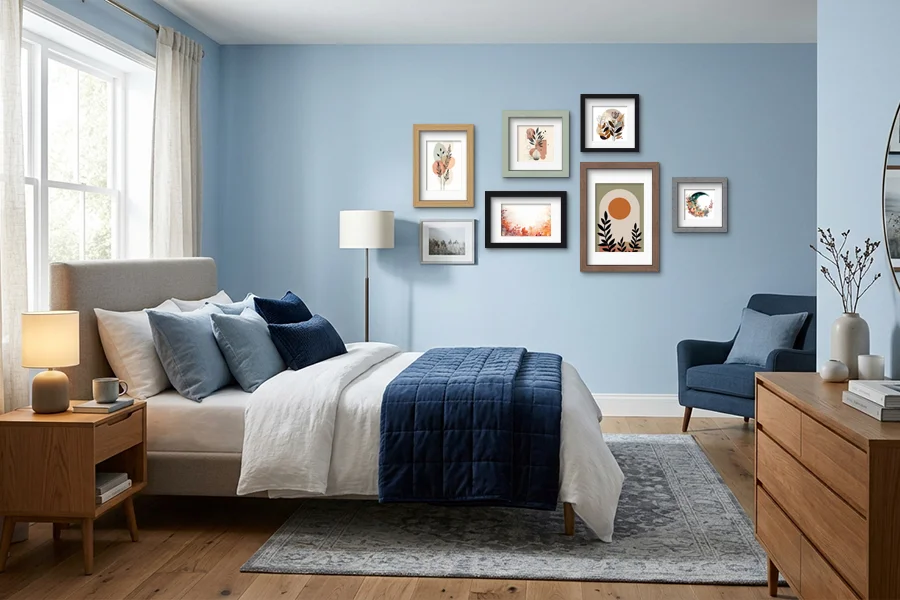
Colour is usually the first & prominent thing to change when a boy's room stops feeling right. Primary colours and bright blue(baby blue) walls read as childish once he hits his teens, even if he never says it out loud. The fix is not white or grey by default. It is picking colours that feel a bit older without going cold or boring.
Charcoal, deep green, navy and warm grey all work well in teenage boys' rooms. They feel calm and grown up, but still have enough depth to avoid looking like an office. Moreover, these colours have a different kind of energy.
Muted terracotta or rust is worth trying too, especially as an accent wall, since it adds warmth without feeling babyish. A simple rule helps here. Pick one main colour for the walls, then bring in a second, slightly bolder shade through bedding, a rug or a chair.
Avoid using more than two or three colours in total. Rooms that try to do too much end up looking busy rather than styled.
If he is in a small or box room, darker colours can still work. The trick is balancing them with enough natural light and a lighter ceiling, so the room stays cosy rather than closed in. This matters more in UK homes, where many teen bedrooms are on the smaller side to begin with.
For rented homes or rooms where painting is not an option, colour can still shift through bedding, curtains and a statement mat. It will not have the same impact as painted walls, but it gets you most of the way there without breaking any tenancy rules.
One last tip before committing to a colour. Buy a sample pot and paint a piece of card, not the wall itself. Move it around the room over the course of a day or two. Colours shift a lot depending on the light, and what looks great in the shop can feel completely different by evening.

Divide the Room Into Zones That Work for Him
Most teenage bedrooms need to do three jobs. Sleeping, studying and hanging out. That is a lot to ask from one room, especially if it is on the smaller side, but a bit of planning makes it work.
Start with the bed. It usually takes up the most space, so decide where it goes first and build everything else around it. Tucking it into a corner or against the shortest wall often frees up more floor space than people expect.
The study area needs its own spot, even if it is just a small desk in the corner. Putting a desk right next to the bed sounds efficient, but it rarely works in practice. It is too easy for homework to turn into lying down, and lying down to turn into scrolling on his phone. A bit of physical distance between the two areas helps him actually switch between them.
Then there is the hang-out zone. This does not need to be big. A comfortable chair, a beanbag or even just floor cushions near a speaker or a games console gives him somewhere that feels separate from both the bed and the desk. It is the part of the room where he can exist without it being about sleep or schoolwork.
In smaller rooms, zoning is more about clever layout than adding furniture. A carpet can mark out the hang-out area without needing a wall or divider. Shelving or a tall bookcase can act as a soft break between the study corner and the rest of the room, without blocking light or making the space feel smaller.

The goal is not to create three separate rooms inside one. It is making sure each part of the room has a clear purpose, so it does not end up feeling like a bed with a desk shoved in as an afterthought.
Furniture That Grows With Him, Not Just His Age
It is pleasing to buy furniture that suits how old he is right now. The trouble is, teenage years move fast, and furniture that felt right at thirteen can feel completely wrong by sixteen or eighteen. Bunk beds, novelty-shaped desks and anything with cartoon branding tend to age out within a year or two, which means buying twice.
A better approach is picking furniture that works now and still makes sense a few years down the line. A single or small double bed with a plain, solid frame will always look right, whatever his interests are at the time. The same goes for a desk. Simple and sturdy beats anything with too much personality built into the design itself, since the room's personality should come from what goes on the walls and shelves.
Storage is worth spending a bit more on if the budget allows. A wardrobe or chest of drawers that can handle a growing collection of clothes, trainers and whatever hobby gear comes along is far more useful than furniture that only suits how much stuff he has right now.
Materials matter too. Wood veneer, painted MDF or simple metal frames age better than anything glossy or heavily branded. They also tend to suit a wider range of colour schemes, which is handy if the walls change before the furniture does.
If money is tight, it does not have to be an all-at-once purchase. Start with the bed and a proper desk, since those get used daily. Storage and extras, like a chair or a shelving unit, can be added in stages as needed.

One thing worth avoiding altogether is furniture designed to look "cool" in an obvious way. Race car beds, oversized branded logos, anything trying too hard tends to feel dated fast and rarely matches how his taste develops as he gets older.
Lighting That Does More Than Switch On and Off
A single ceiling light is rarely enough for a teenage boy's room, even though it is what most rooms start with. Different parts of the day call for different lighting, and relying on one bright overhead light means the room never quite adjusts to what he is actually doing in it.
Task lighting matters most at the desk. A proper desk lamp with adjustable brightness makes a real difference for evening homework or gaming, and it spares his eyes the strain of one harsh ceiling light. It does not need to be expensive, just positioned well and bright enough to work under without winking.
Ambient lighting is when the room starts to feel more like his space and less like a bedroom that happens to have a desk. LED strip lights behind a headboard or along a shelf, a floor lamp in the corner, or even just a warmer bulb in an existing lamp all help soften the room for downtime. This is often the cheapest upgrade in the whole room, and usually the one that gets noticed first.

Let His Walls Tell His Story
Walls get overlooked in most bedroom makeovers, yet they say more about a teenager than almost anything else in the room. Blu Tack and curling posters do not do justice to what he actually cares about, whether that is football, music, or something he has been collecting for years.
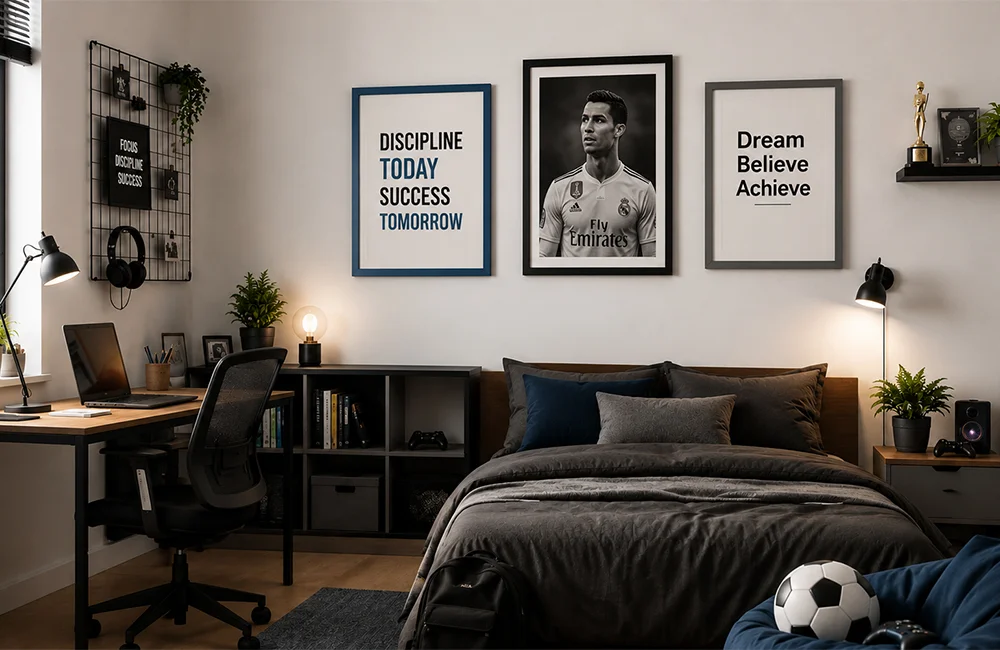
Framing turns a flat poster or print into something that actually looks intentional. It does not need to be expensive or formal. A few properly framed prints on a plain wall often say more than a wall covered edge to edge in tape marks and torn corners.
For football fans, a framed shirt makes a great feature piece, especially if it is one tied to a specific match, season, or player they look up to.
Music fans are usually drawn to something different. Framing a few favourite vinyl records turns them into wall art rather than something stuck in a box under the bed. It works particularly well above a desk or beside a bed.
For boys with a few different interests, a gallery wall style layout using multiple small photo frames together tends to work better than one single large piece. It provides space for photos, prints, and smaller collectibles to sit side by side, and it is easy to add to over time as his interests shift or grow.
The point of this section is not to fill every inch of wall space. A couple of well-chosen, well-framed pieces will always look better than a room covered in posters. It is one of the simplest ways to make a bedroom feel personal rather than generic, and it is often the part of the room he notices and appreciates most.

Smart Storage for Everything From Trainers to Trophies
Teenage boys collect things without really trying to. Trainers, football boots, old game consoles, trophies from years of school sports, it all builds up fast, and most bedrooms were never designed to handle it. Good storage is not just about tidiness. Actually, it is about making sure the things he cares about actually get seen instead of shoved in a box under the bed.
Open shelving works well for anything he is proud of. Trophies, framed prints, a small speaker or a few favourite books all look better out on display than hidden away. It also makes the room feel more lived-in, rather than as if storage were an afterthought.
Closed storage still matters, and probably matters more day-to-day. A proper wardrobe or a set of drawers keeps the everyday mess out of sight, which makes a real difference to how tidy the room feels without much effort.
Under-bed storage boxes are worth using too, especially for trainers or sports gear that does not need to be on show all the time.
The trick is finding a balance between the two. A room with only open shelving usually ends up looking cluttered, since everything is visible whether it deserves to be or not. On the other hand, a room with only closed storage can feel a bit flat, since none of his personality is actually visible.

If space is tight, look for furniture that pulls double duty. A bed with drawers built into the base, a desk with shelving above it, or a storage ottoman that doubles as extra seating all help a small room work harder without feeling packed with furniture.
Small Details That Make the Room Feel Like His
The big pieces, furniture, colour, and layout only get a room so far. It is usually the small details that make it feel finished, and they are often the cheapest part of the whole project too.
Textiles make a bigger difference than people expect. A proper duvet cover instead of a childish one, a throw across the end of the bed, or a couple of cushions in a colour that ties into the room all add warmth without much cost.
Desk accessories are worth a mention too, since that is a space he actually uses every day. A decent desk organiser, a proper pen pot instead of an old mug, or a small plant if he is likely to remember to water it, all make the desk feel like a space he wants to sit at rather than one he avoids.
Scent and sound are easy to forget but genuinely change how a room feels. A music speaker while he is getting ready or doing homework, or a scented candle or reed diffuser if that is his sort of thing, both add another layer without taking up much space at all.
None of these details need a big budget or a big plan. A few small changes, chosen with a bit of thought, usually do more to make a room feel personal than one expensive statement piece ever could.
Designing a Room That Won't Feel Dated in Two Years
The easiest way to keep a teenage bedroom feeling right for longer is to separate what stays from what changes. Furniture, wall colour and flooring should be chosen to last, since these are the expensive, harder-to-change elements.
Everything else, bedding, wall art, cushions and small decor, can shift as his interests do, without needing to redo the whole room.

This is exactly why framed prints and posters work so well long-term. A photo frame stays useful even when what is inside it changes. Swapping a print or a poster costs very little and takes minutes, yet it keeps the room feeling current without touching the furniture or the walls underneath.
A teenage boy's taste at thirteen will not be his taste at seventeen, and that is fine. A room built around solid basics, with room for the personal touches to change, will always feel like his, at whatever stage he is at.